Chocolate that travels by river
The road here is water
In Guapi there are no roads to the cacao. Reaching the farms means a boat up the river, then a dugout canoe poled through channels that narrow into the mangrove, then walking across swampland. The shortest trip takes two hours, and it is only possible if enough rain fell the night before to raise the water.
That is the first leg of the journey every bean in our chocolate makes.
Before Chocomueic there was no industry
Guapi sits on Colombia's Pacific coast, in the department of Cauca, between the ocean and the rainforest. There was always cacao here. There was never anywhere to turn it into chocolate.
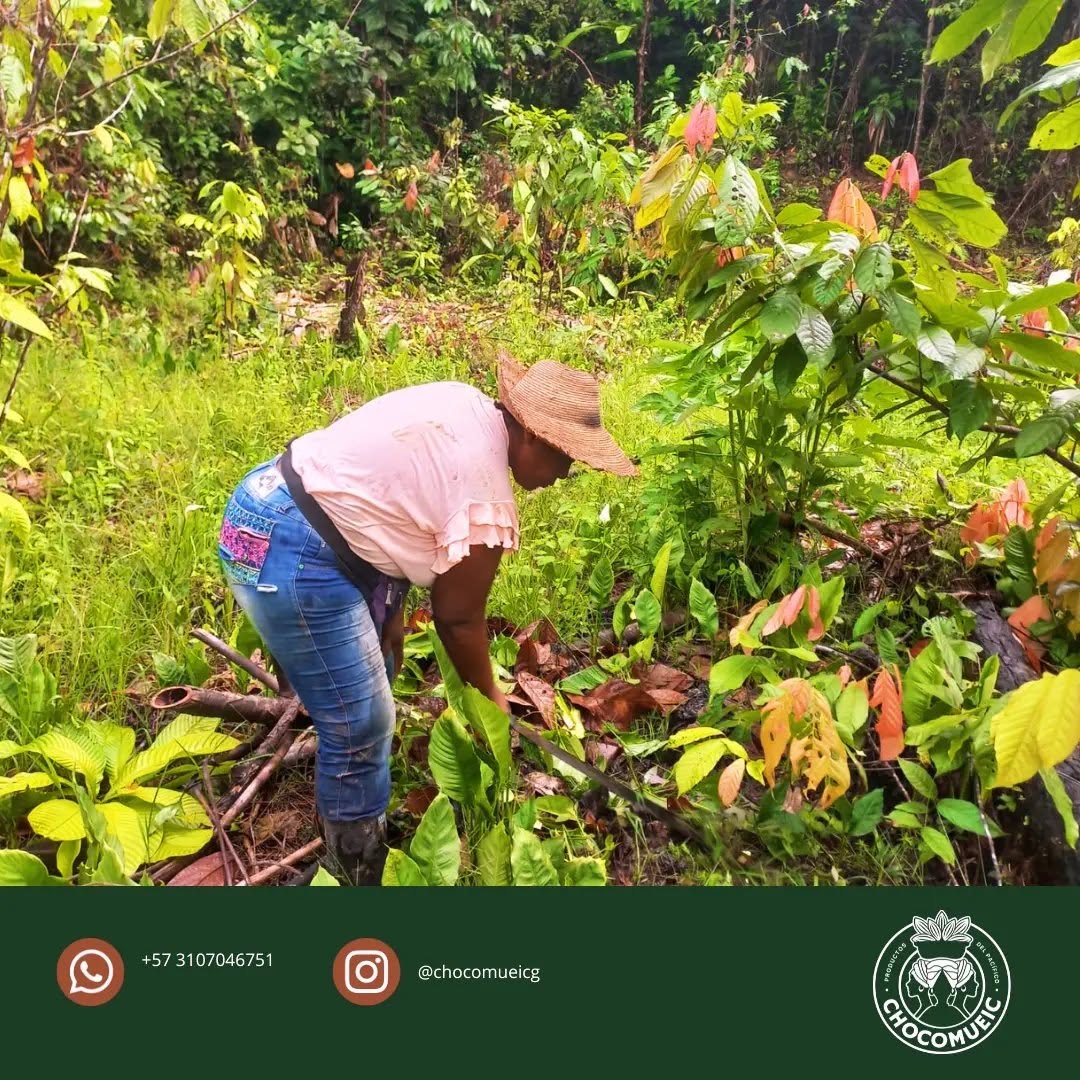
In 2018 Carmen Ilse Loango began travelling up and down the river to find those growers. She identified fifteen families, and made each of them the same promise: everything you produce, Chocomueic will buy.
The name
The project did not begin under this name. At first it was called Amor Dulce, sweet love. The name changed during a conversation among friends, when it became clear what was really happening: this was not only about chocolate, it was about who was making it.
Chocomueic: chocolate made by enterprising women with cultural identity
Learning the craft
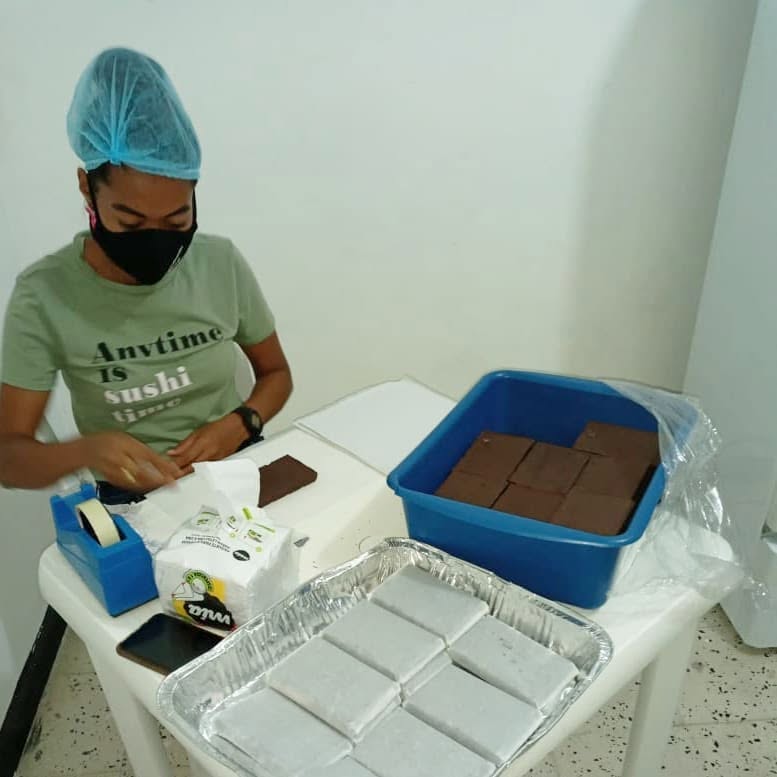
Ilse wanted to make chocolate bars before she knew how. She tried by hand in her own kitchen, more than once, until she understood that instinct was not going to be enough.
She learned that SENA, Colombia's national training service, would open a course in Guapi if she could gather twenty-five people. She went out and gathered them. The artisanal chocolate and confectionery course began on 17 July 2019, and the instructor who taught it still works with the team today.
The plant was built piece by piece, with whatever the sales allowed: first a traditional mill, then an oven. In 2023 came the refiner, and with it the bars Ilse had wanted to make from the start.
The women
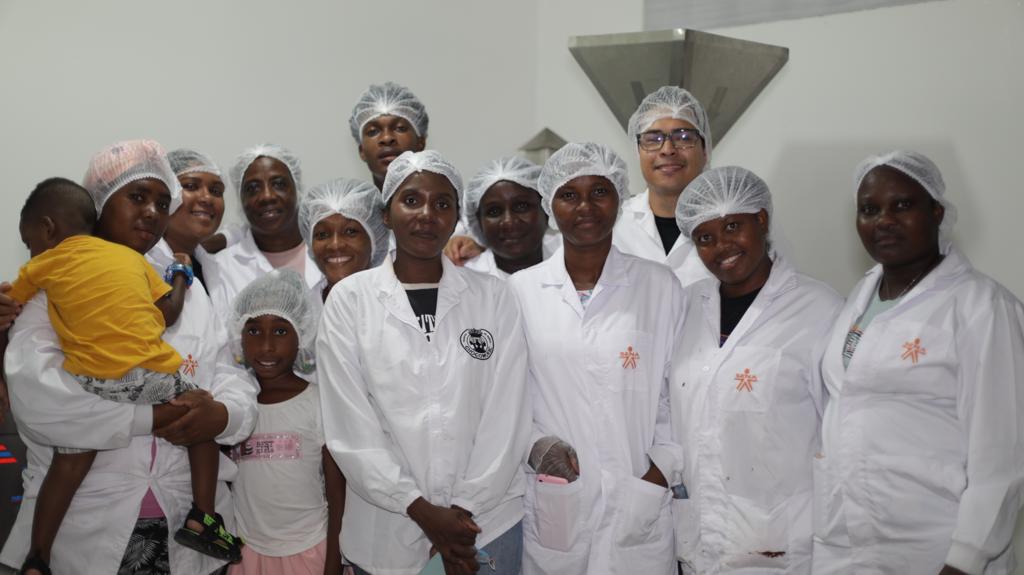
We are a team of Black and Indigenous women from Guapi. Many are heads of household. Several are survivors of the armed conflict. All of them carry the cooking and the flavours of their grandmothers, which is what gives these products something no written recipe contains.
Around forty families are now part of the chain: some twenty women work in the processing plant and some twenty growers cultivate and harvest.
We trained as chocolate technicians. We hold INVIMA sanitary registration, a registered trademark, and green business certification from the regional environmental authority of Cauca.
“We have not stopped being artisanal, but now we meet every standard. We learned that knowledge is where the power is.”
Ilse Loango, founder
The commitment that holds it together
Chocomueic buys all the cacao the municipality produces. Not part of it: all of it.
That commitment was made before there was money to honour it, and finding the resources to sustain it has been the organisation's greatest challenge. It is carried by sales and by partnerships.
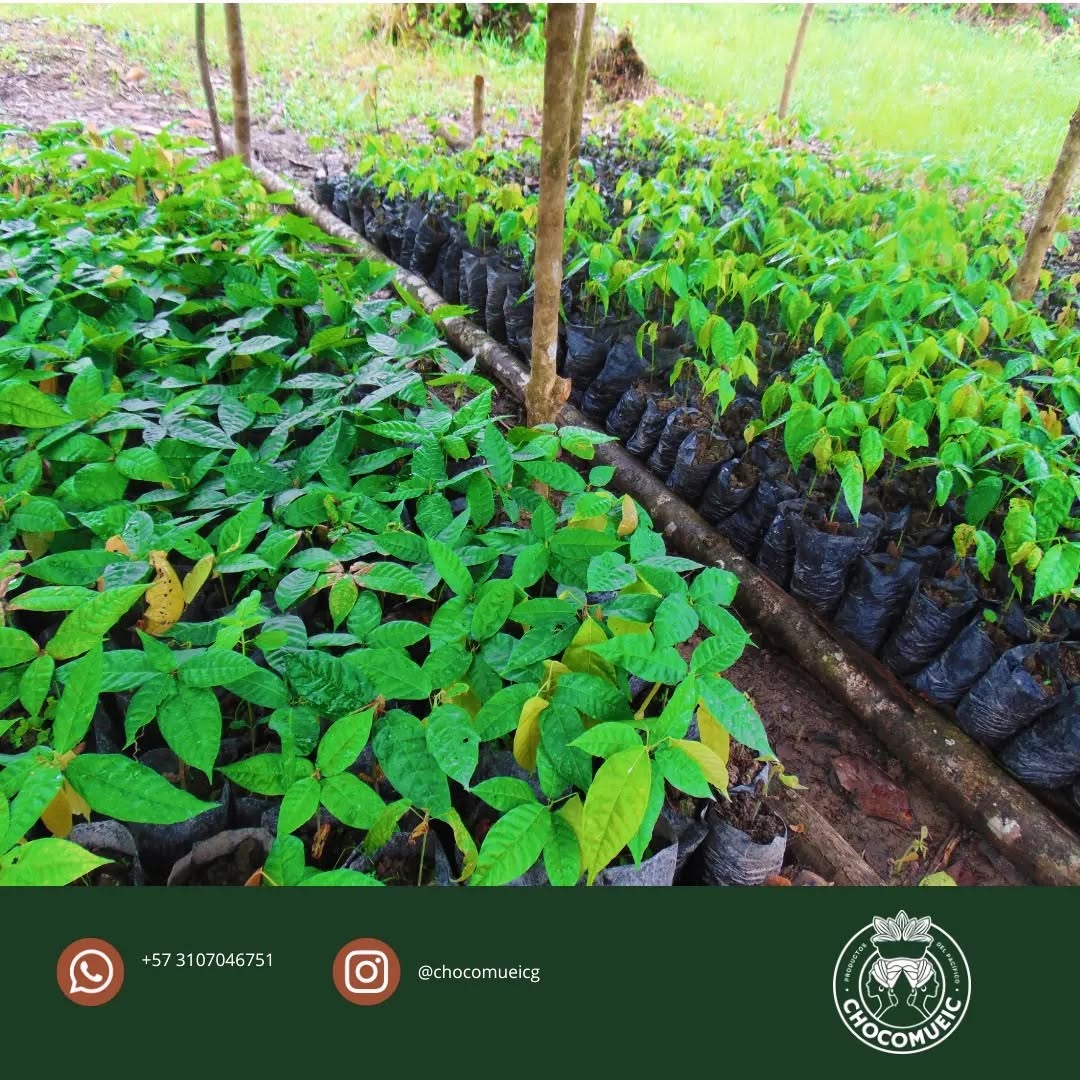
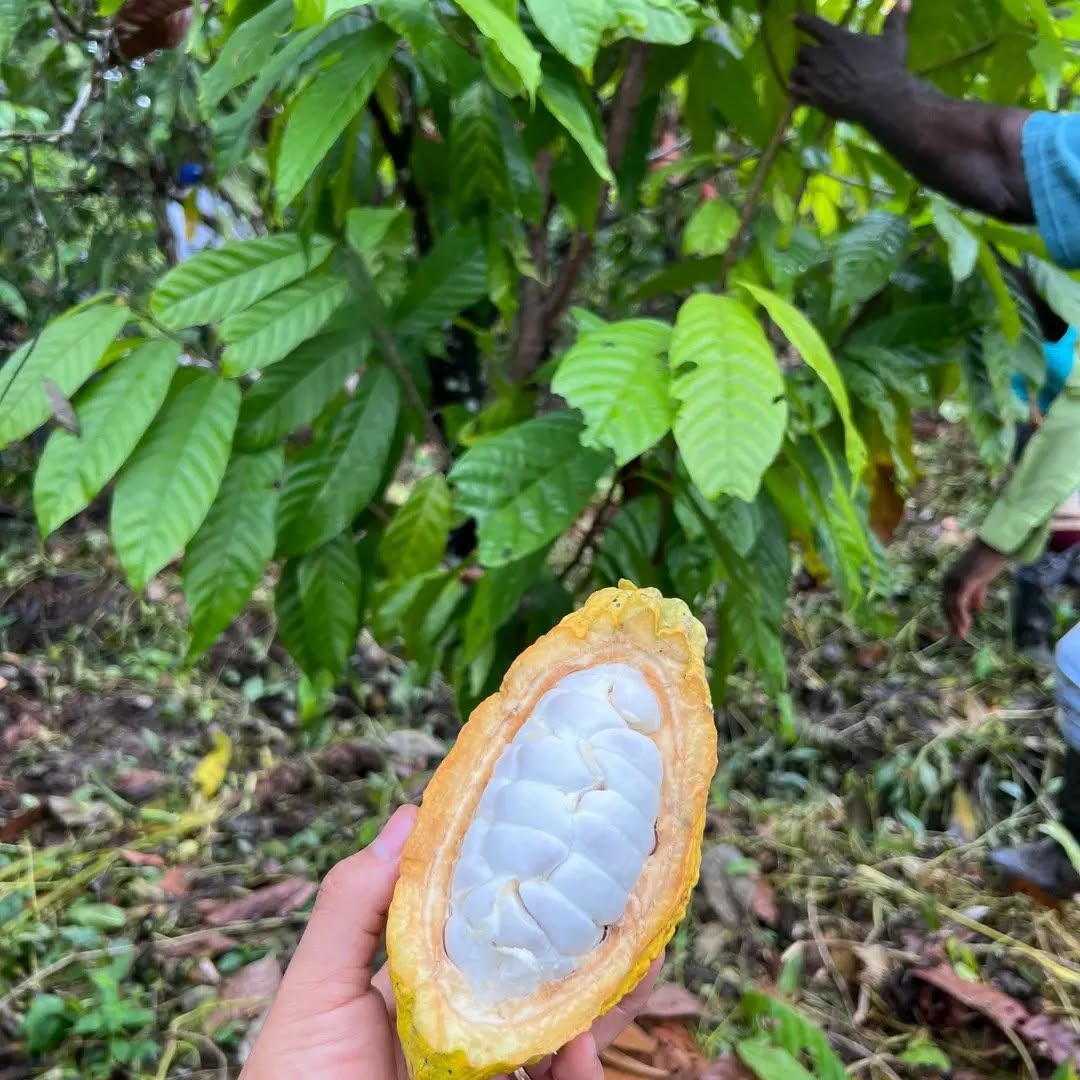
There is more than a purchase behind that decision. A cacao tree bears its first fruit after three years. In a territory where other crops yield in three months, a grower's willingness to wait depends on knowing that someone will be there when the tree finally bears.
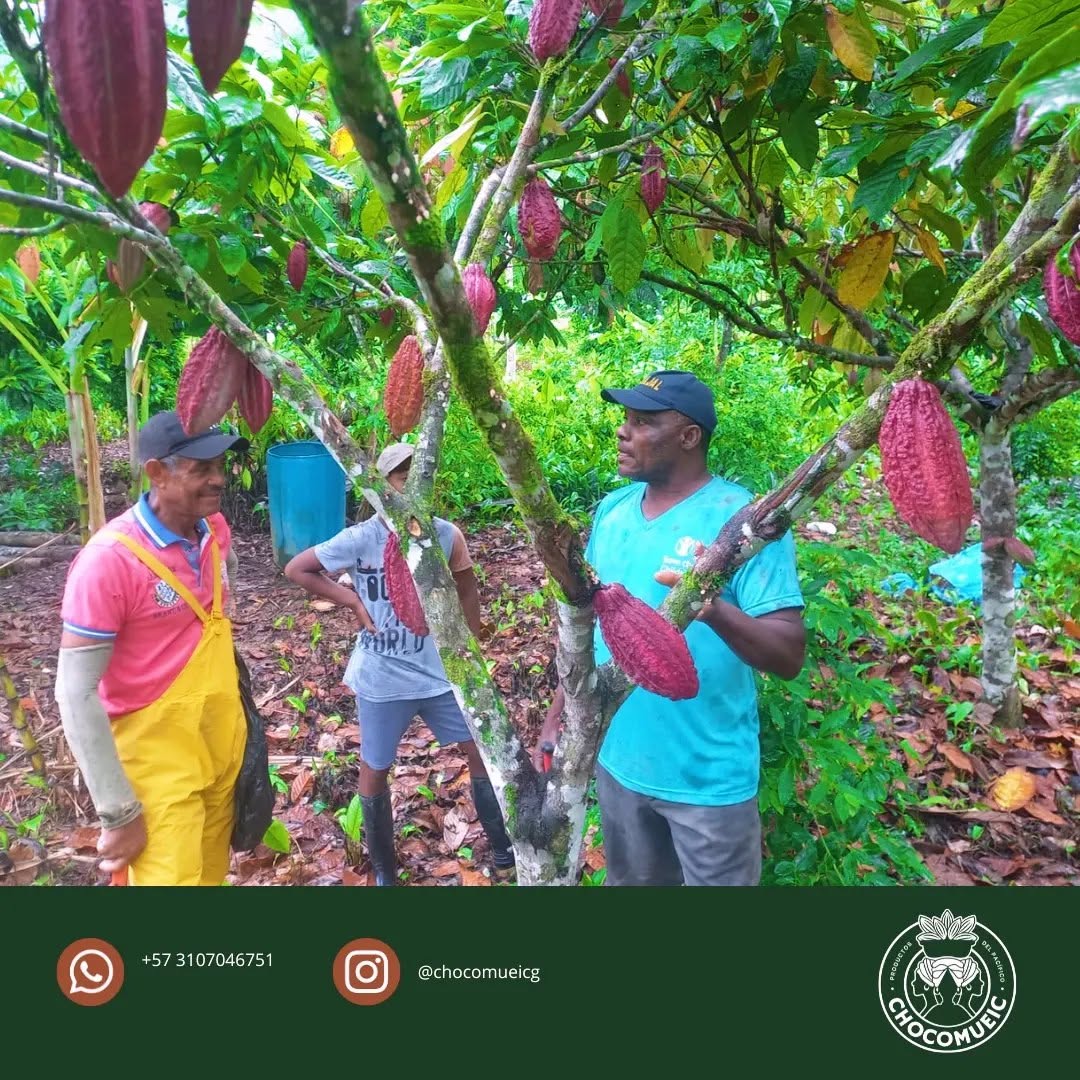
One of those growers is Don Solón Paz. He farms three hectares in the hamlet of La Pampa and is our main supplier. He ferments and dries the cacao at his own house, and his wife carries it up the river to the plant. His grove sat abandoned for years, because there was no one to sell it to.
“The work starts small, but it ends up big when you really want it.”
Solón Paz, cacao grower
Cacao and chocolate are an excuse
In Guapi cacao is not only an agricultural product. Grandmothers gathered to make chocolate, and in those gatherings community was woven: stories were told, skills were passed on, people were accompanied.
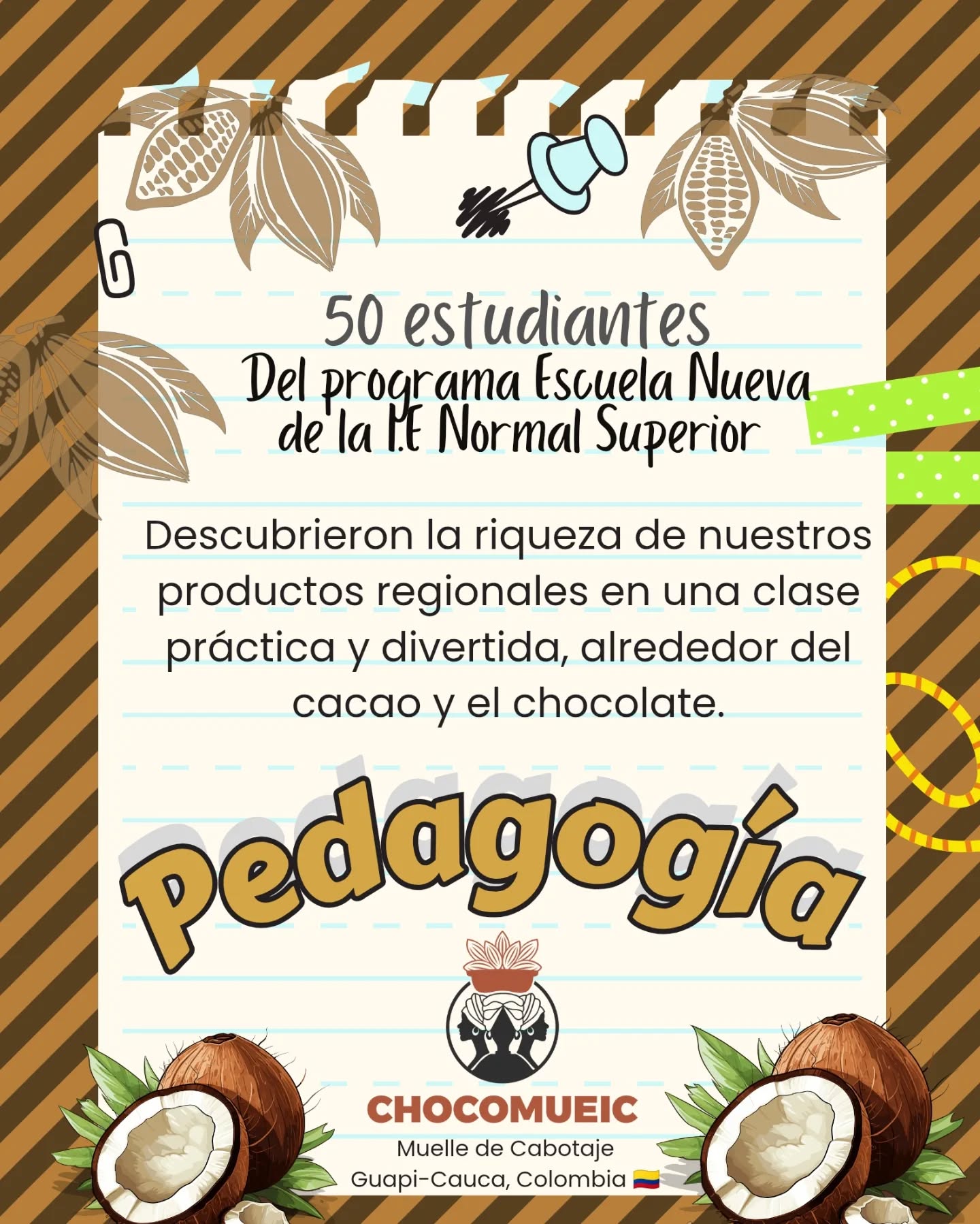
That same idea sustains the community library and cultural centre led by Chocomueic, the first in the municipality. It promotes reading, music, art and leadership, working with the local community action board and the municipal youth platform.
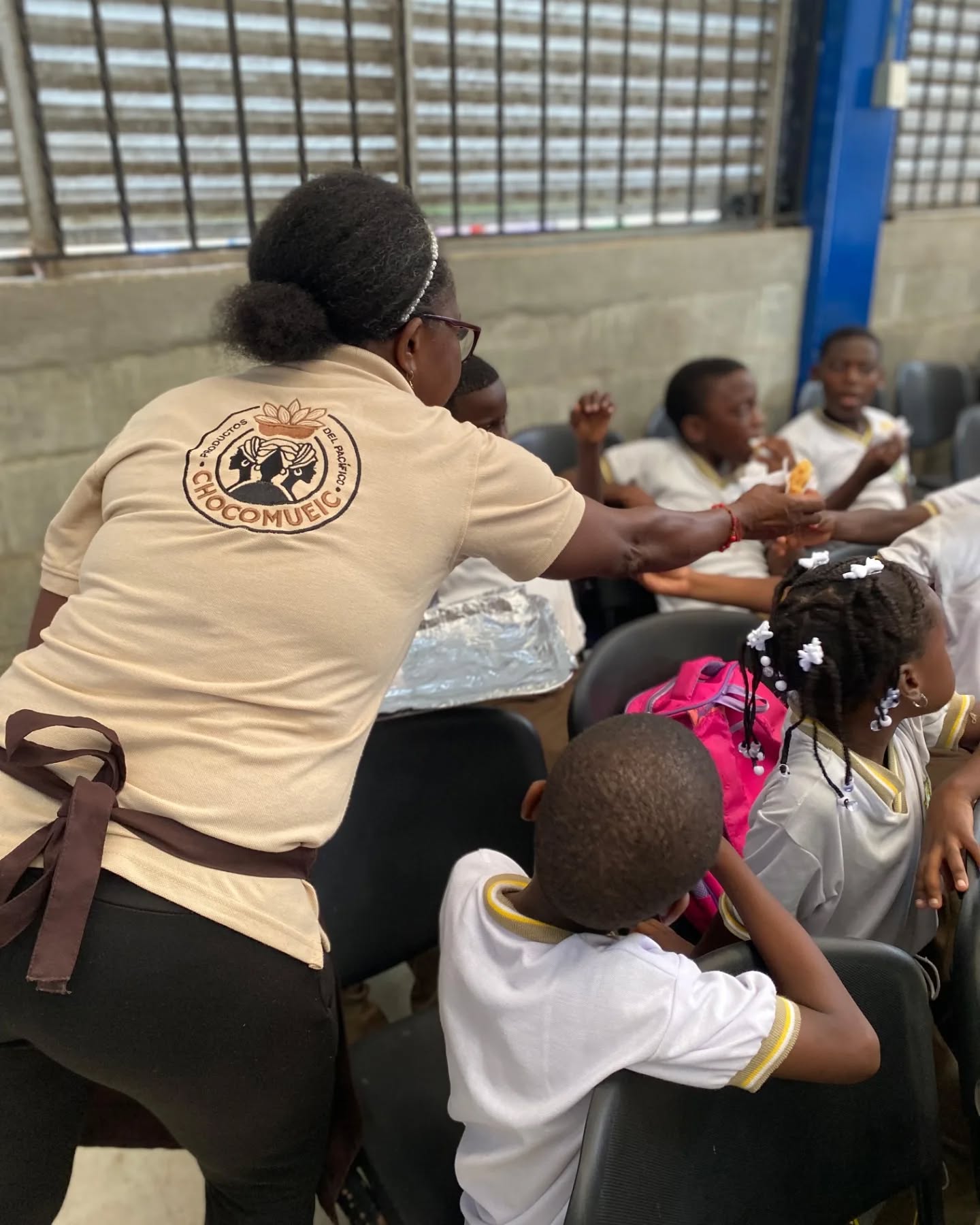
“Cacao and chocolate are an excuse. What really moves us is the chance to change lives.”
Ilse Loango, founder
From Guapi outward
Our products are already sold in Buenaventura, Cali, Popayán, Bogotá, Cartagena and Huila, through solidarity distribution networks such as Vitrina Pacífica, Kumé of the ACUA Foundation, and the Slow Food Earth Market.
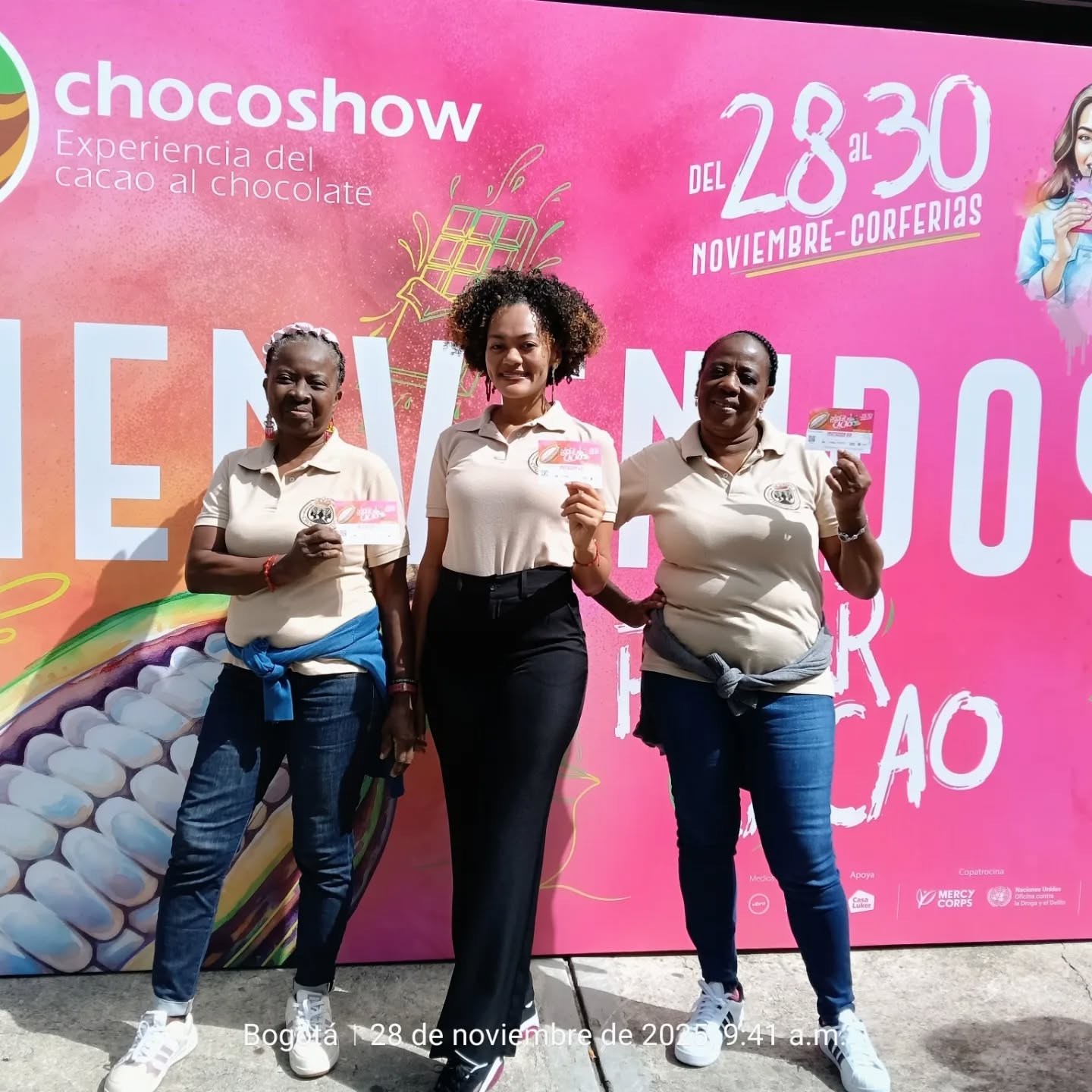
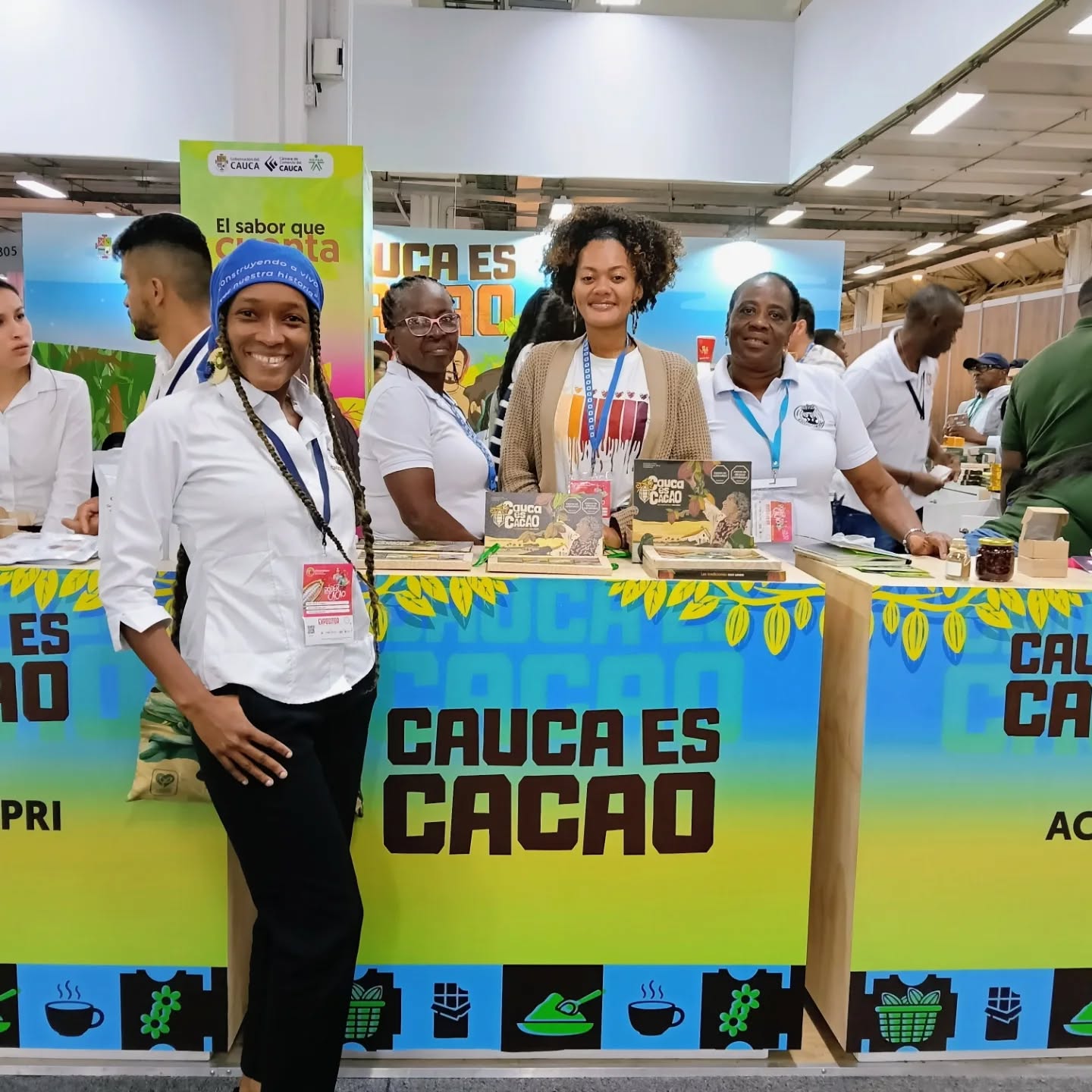
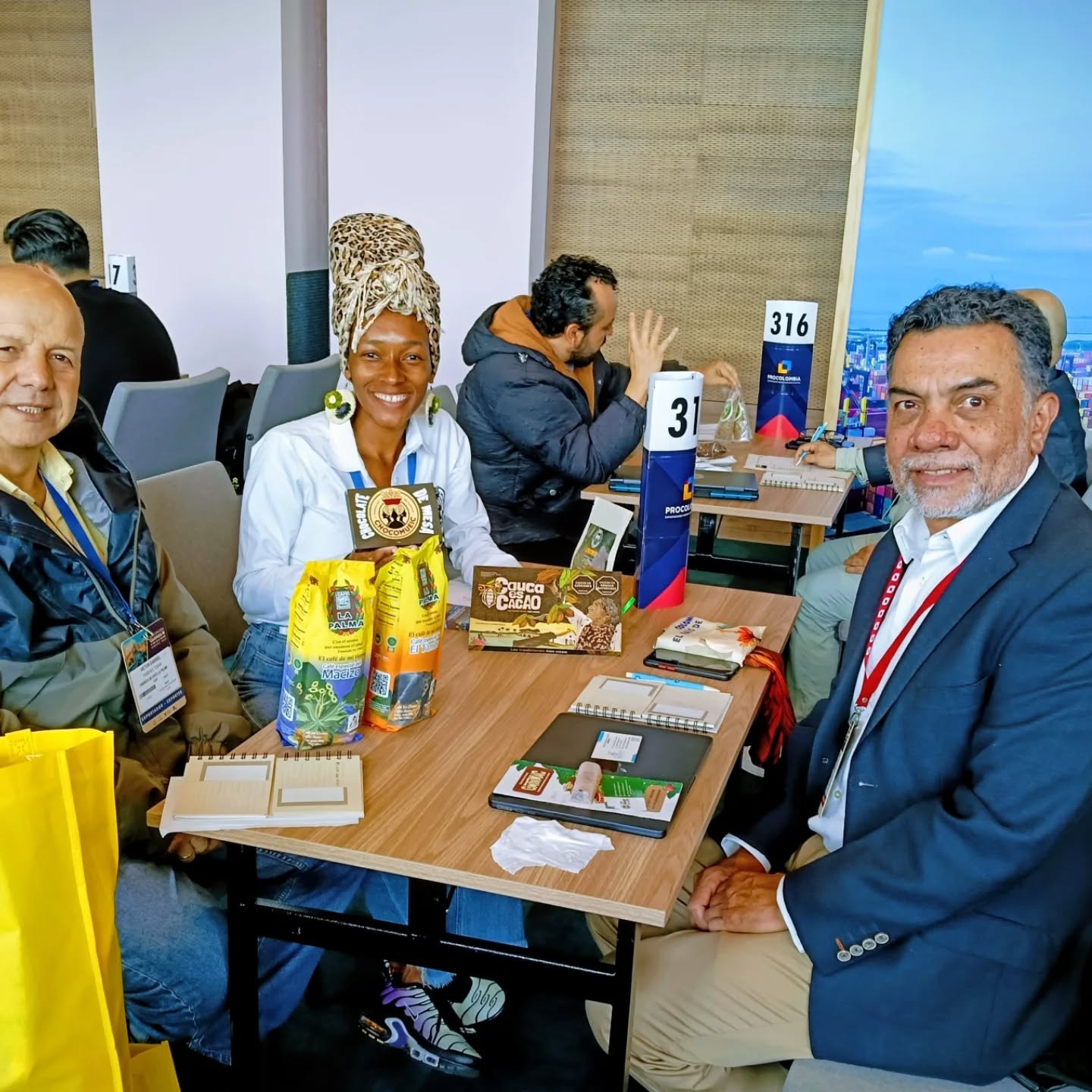
We have taken part in Chocoshow, Colombia's national cacao and chocolate fair in Bogotá, and in ProColombia's trade mission in Cartagena. We are part of the regional origin brand Origen Cauca es Cacao.
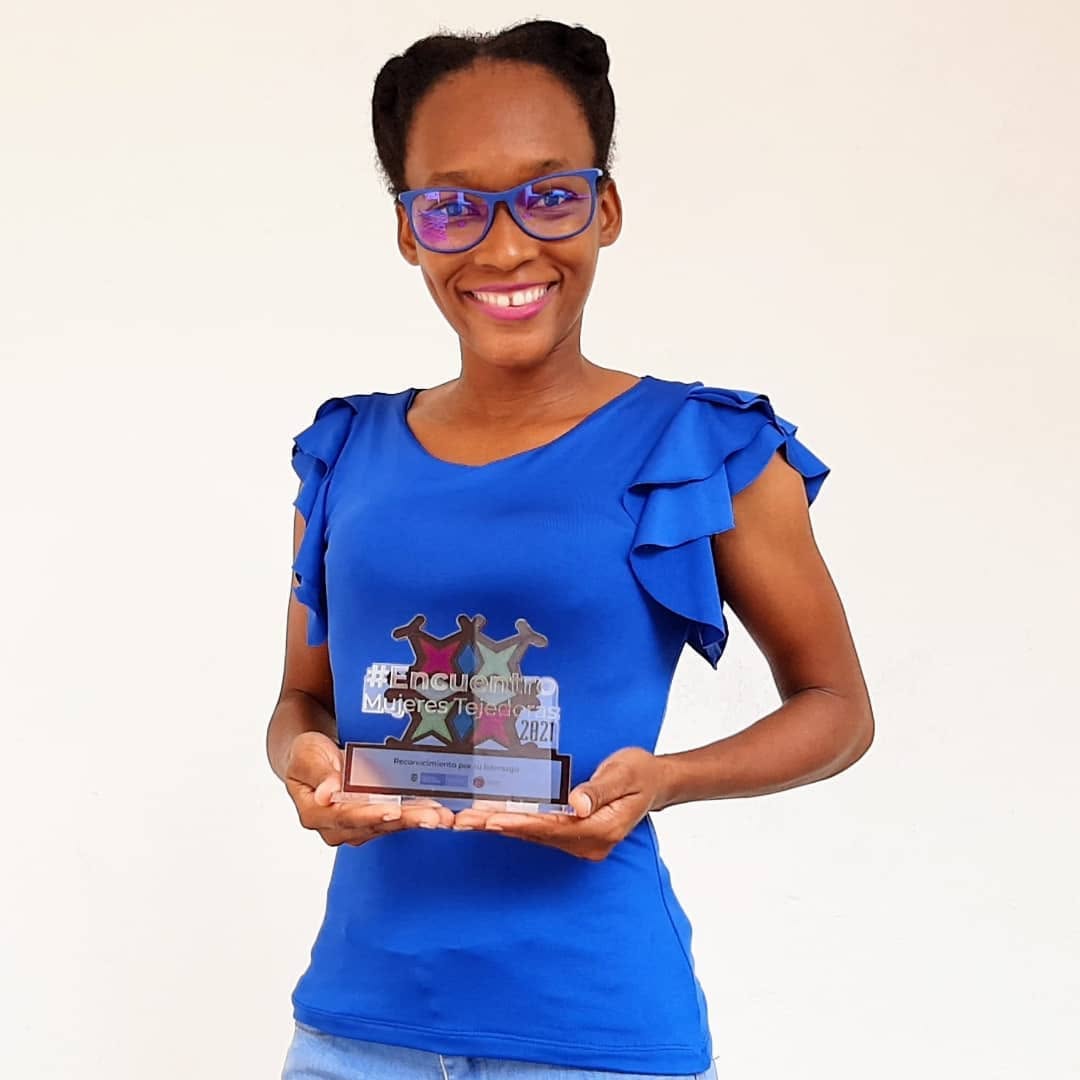
“Our cacao has many names before it becomes chocolate. It is called river, tide, canoe, paddle, creek, estuary, rainforest.”
Ilse Loango, founder
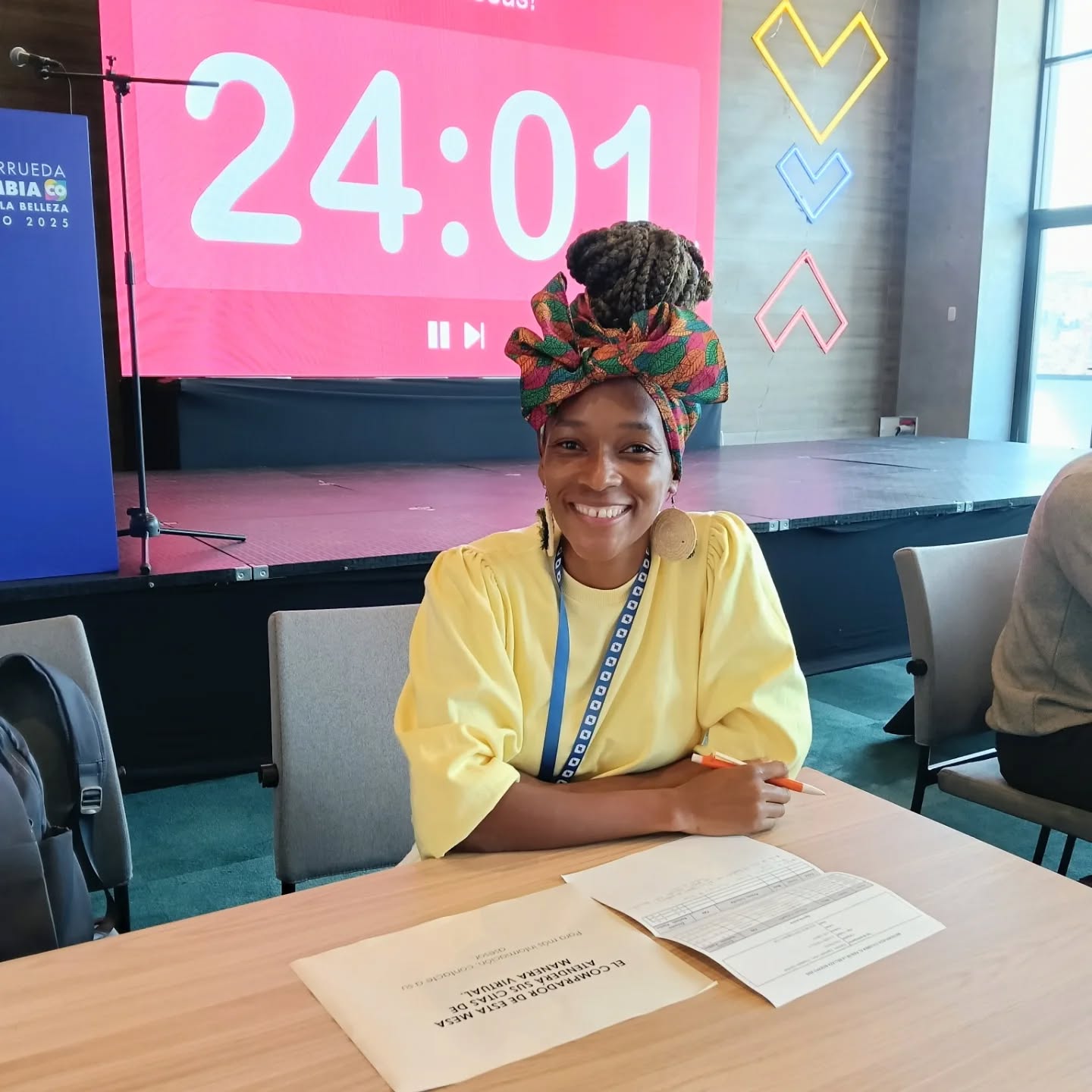
Carmen Ilse Loango founded Chocomueic in 2018 so that Guapi's cacao would be transformed within its own territory and generate income for the women and growers of the municipality.